Support CleanTechnica’s work with a Substack subscription or on Stripe.
“I created Extraordinary Moments: Revealing the Hidden Science All Around Us as a gentle nudge, especially for young people, and just as important for their parents — to realize that science is not separate from our lives. It is everywhere,” says author Phyllis Frankel.
Enlisting readers to “be the scientists” through vivid fine art images, world-renowned science illustrator Frankel zooms in and out of the beautiful and fascinating moments around us in her new book to reveal the chemical, natural, or physical processes—from viscosity and sweating to chlorophyll and capillary action—behind scientific phenomena. In doing so, Frankl is somewhat rebellious, not acquiescing to higher education’s occasional disconnect from the wider public. Through stunning, clear, detailed photography, she unveils the details of our world on a microscopic scale, allowing us to slow down and consider the beauty in the everyday systems at work.
The intersection of science and photography
Basic science lays the foundation for future innovation. It begins with curiosity about the world around us and develops into intellectual inquiry. The United Nations stresses that scientists need more effective strategies to adapt global concepts to local contexts. Communicating the importance of their findings is an important step to inspiring understanding and change, especially at the intersection of disciplines.
And that intersection is where Frankel works — as a research scientist at MIT in the Department of Chemical Engineering with additional support from Mechanical Engineering and Materials Science and Engineering. She points out that “everything we observe, everything we touch, and everything we wonder about has a scientific story behind it.” “Even as a child, I found myself wondering why something looked the way it did, paying close attention to patterns, reflections, and little surprises in the world around me.”
This spirit of curiosity continued into her career as a scientist. Rather than adopting a siled approach, where each content area is isolated from the other, Frankl established workshops and conferences on image and meaning, the purpose of which was to develop new methods for enhancing public understanding of science through visual expression.
She realizes that photographers and scientists have a lot in common. They experiment with combinations of colours, materials and processes with the aim of creating something new and revealing. As they delve into new worlds, they reveal nature’s secrets in a way that expands our understanding of the world around us.
Frankl’s work is an invitation to engage with and understand our surroundings, both visible and hard-to-see—so we open up opportunities to experience what she calls “everyday wonders.” Earlier in her career, she developed and directed edX’s first massive open online course (MOOC), covering scientific and engineering imaging. (Want to join the fun? 34 teaching and supplemental course materials are available on MIT OpenCourseWare.)
As a research scientist, she takes photographs of research in different laboratories. Because of this daily exposure to various scientific phenomena, I was able to discern connections that might escape us during our daily routine. She believes that “you will understand what you see” when you step back from worldly matters and try to observe them from a new perspective.
But why would you choose to write a book for teens in the 21st century? They are not the usual academic audience. Frankel explains her rationale.
If we can explain something as important as global warming, for example, in a visually accessible way – honest, clear and welcoming – we will be able to help more people understand how deeply these phenomena shape all of our lives. Phenomenal Moments is my attempt to raise this awareness, one image at a time.
To “spark this awareness” in extraordinary moments, Frankl organizes the book into five sections that explore light and shadow, form, traces, transitions, and surfaces. Each section begins with an image illustrating the topic of the chapter. Each full-sized image is accompanied by a description of how Frankl created the image or a personal anecdote, referred to as a “moment.”
This is followed by “phenomenon”, which is a description of the knowledge contained in what the viewer sees. I created this pairing in hopes that “you will remember these images as you go about your daily life.”
Let’s take a look at some of the images Frankel provided us with at CleanTechnica and see how she developed amazing moments in science and photography.
The Mystery of Autumn Leaves: When she picked up leaves that appeared to be in the middle of New England’s famous color change, Frankel found it compositionally better to make a two-leaf arrangement than to use just one thing. That moment translated into her curiosity about why tree leaves turn color in the fall. I learned that colors result from the decomposition of the green pigment called chlorophyll. Energy from sunlight is no longer needed, chlorophyll is not replenished, and yellow and red pigments appear. These color changes are an example of autumn cycling.

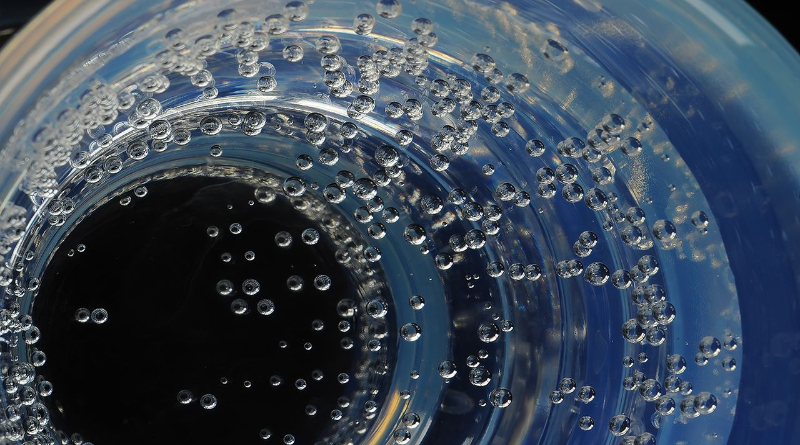
How soda brings activity: This moment of bubbles forming after pouring carbonated water into a glass came about after Frankl looked at the elements in the picture and wondered whether changing to more than one of these elements would enhance the picture. She explains that the phenomenon of these bubbles is carbon dioxide that dissolves in the liquid under pressure. Pouring releases the pressure, and the carbon dioxide comes out of the solution in the form of fizz. Bubbles are formed by imperfections in the glass and serve as nucleation sites where carbon dioxide molecules can collect.
Final Thoughts on Massive Moments: A really good game for curious teens
As we immerse ourselves in the holiday season in December, we begin to think of ways to express our love to the important people in our lives. Offering a compelling, non-digital approach to images, this book will appeal to many teens with its collection of interesting science images, stories about how a research scientist discovered science in her own life, and basic explanations of everyday events.
Frankel speaks to teens who she hopes will read and absorb her interdisciplinary narrative, hoping they will be inspired to take their own photographs. The book’s confluence of methods may actually do just that: inspiring teens to grab their smartphones and expand their photographic repertoire to capture new ways of seeing familiar, natural things.
In many ways, this book is my response to what I see as a gap in how the research community speaks to the public. We haven’t fully accepted how powerful images can be to open a window onto complex ideas, or how visual language can spark curiosity rather than shut it down.
resources
Subscribe to CleanTechnica’s Weekly Substack for Zach and Scott’s in-depth analysis and high-level recaps, subscribe to our daily newsletter, and follow us on Google News! Do you have a tip for CleanTechnica? Want to advertise? Want to suggest a guest for our CleanTech Talk podcast? Contact us here. Subscribe to our daily newsletter to get 15 new clean tech stories every day. Or sign up for our weekly newsletter containing the week’s top stories if daily news gets too repetitive.
CleanTechnica uses affiliate links. See our policy here.
CleanTechnica comment policy