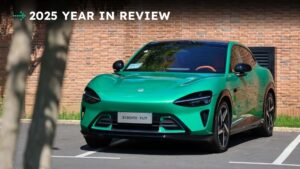
Xiaomi YU7 is a mid-sized crossover produced by Chinese technology company Xiaomi. It directly competes with the Tesla Model Y in China. YU7 pricing starts at around $35,000 for the base model single-drive RWD YU7. Xiaomi received more than 200,000 orders within the first hour of the YU7 going on sale.
Maybe it’s a case of the winter blues. Or maybe it’s just an awareness of the state of the world over the past year. But I’ve had a terrible attitude about the state of cars, and I’m not just talking about the mostly mediocre array of electric cars Americans have to choose from.
Whether gas, hybrid, or electric, everything is often very expensive, often not compelling to look at, and seems to be made with a bit of disdain by brands that don’t seem to want to make cars of any kind, but especially not electric ones.
We’ve driven a lot of cars on this site from brands asking their PR reps to talk the big game, while senior executives do their best to undermine their electrification efforts behind closed doors. So far, it seems that many car brands want to return to using fuel as soon as possible.
So, this year, when I was one of the few Westerners behind the wheel of the Xiaomi YU7, I felt like a breath of fresh air. Here I was, trying a product made by a company that had something to prove not only to its home market in China, but to the world, and it showed.
I can confidently say that it may be the best electric car I’ve driven in 2025. And it may be the best electric car I’ve ever driven.

The YU7’s status as the new standard goes beyond impeccable fit and finish, or attention to detail. It’s also more than just the nearly unalterable driving dynamics and foolproof, clever software suite — we all knew that from Xiaomi’s current representation as a technology powerhouse, even if Xiaomi’s tech products aren’t really sold in the US.
It feels like the YU7 was made by people passionate about making an electric car.
The whole goal of the brand from its inception was to figure out a way to capture what people wanted to drive; It’s distilled the best parts of driving, plus the tech features people love, into an accessible product and form factor. And I figured out how to do it profitably, by scaling quickly and not really reinventing the wheel.

Photography: Kevin Williams/InsideEVs
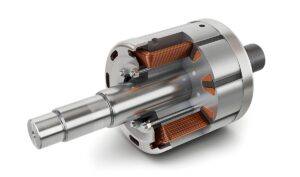
I’ve said this before on podcasts and my initial reading of the Xiaomi YU7’s first drive event: The YU7 itself is not technically a flagship. The battery technology, cell-to-body design, and self-developed motors are technically impressive, and the sub-3-second 0-60 time from 680 horsepower for a car that costs less than $50,000 in China is impressive.
But these specifications are diverse when it comes to the best in its class. The YU7 can’t swap out the battery, and its charging speeds aren’t nearly as high as the megawatt speeds we’ve seen from brands like BYD and Zeekr. I mean, calling it a Ferrari Borosangio knockoff is not a stretch. It is clear that the car is largely inspired by that car in the same way that its sedan sibling, the SU7, resembles the Porsche Taycan.
Photography: Kevin Williams/InsideEVs
But do you know what? I’m not interested. The YU7 wins in execution in every possible way.
Like most people, I will never be able to afford a Taycan or Purosangue in my life. Although inspired by those two cars, Xiaomi’s EVs look fresh and exciting, which is a growing hallmark of China’s auto industry. The YU7 looks expensive and buoyant in ways most non-Chinese electric car makers can only dream of. I mean, compare the YU7 to its direct competitor, the Tesla Model Y.
While the Model Y’s interior and form factor are about the same as they’ve ever been (despite a recent update), it’s rough, the trim interior and solid ride feel like at least a full generation behind what the YU7 offers. There’s a reason the YU7 was essentially sold out for an entire year.
After the first YU7 event last June, I really couldn’t get the car off my mind. I’ve driven a lot of Chinese electric cars in 2025; Most were very impressive from stem to stern, but the YU7 felt the most complete yet. I’d probably be more willing to buy a smaller, cheaper electric car like the Firefly or BYD Seagull, but there are almost no direct competitors to those for sale in the US. However, there are plenty of compact and midsize crossovers, both electric and non-electric. But I haven’t driven anything at home that can match the YU7, or almost any other Chinese electric car I have experience with.
Brands and political pundits have made overtaking China a goal of their own, but I’m not convinced they understand why Xiaomi (or any other Chinese electric car) is so attractive. YU7 is desirable and loved. Western electric car companies may eventually figure out how to make manufacturing their own electric car models profitable, but are they really desirable? This is what they need to work on. And some of them seem to get it. Others never will.
Photography: Kevin Williams/InsideEVs
The fact that Xiaomi has profitably introduced such an impressive range of products after only two years of making cars, all while selling out its waiting lists, should put the entire industry on notice in a way not seen since Tesla first arrived. It could redefine what is possible and acceptable for cars.
In the meantime, I just want to get behind the wheel again.
Contact the author: kevin.williams@insideevs.com
We want your opinion!
What would you like to see on Insideevs.com?
Take our 3-minute survey.
-InsideEVs Team