How to Safely Connect a Portable Generator to Your Home's Electrical Panel
Why You Should Never Connect a Generator Directly to Your Panel
Every year, improper generator connections cause injuries, house fires, and deaths across Tennessee and the rest of the country. When a portable generator is connected directly to a home's main panel without proper transfer equipment, it creates a condition called backfeed — electricity flows backward through the panel, out through the utility meter, and onto the power lines.
What Backfeed Means for Your Neighborhood
- Electrocution risk to utility workers: NES (Nashville Electric Service) lineworkers restoring power after a storm assume the lines are de-energized. Backfed electricity from your generator can deliver lethal voltage to workers on the pole.
- Fire risk in your home: Without proper overcurrent protection at the transfer point, the wiring between the generator and panel can overheat and ignite.
- Equipment damage: When utility power is restored while your generator is still backfeeding, the voltage collision can destroy your generator, appliances, and panel components.
This is why Tennessee electrical code requires an approved transfer mechanism for any generator-to-panel connection.
The Safe Way: Transfer Switches and Interlock Kits
There are two NEC-compliant approaches for connecting a portable generator to selected home circuits.
Manual Transfer Switch
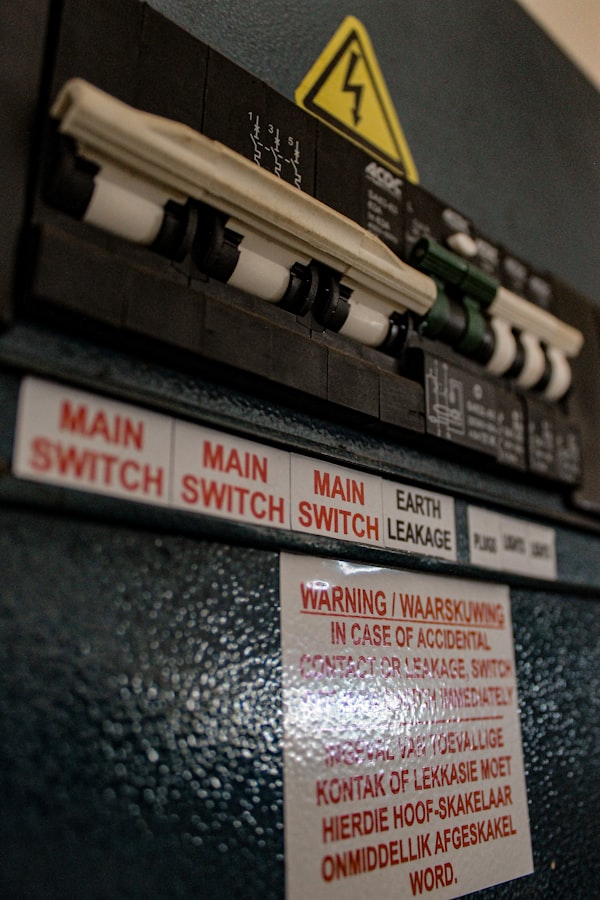
A manual transfer switch is a dedicated subpanel installed next to your main electrical panel. Selected circuits (the ones you want powered during an outage) are moved from the main panel to the transfer switch.
How it works:
- The transfer switch has two positions: Utility and Generator
- In normal operation, the switch is set to Utility — your circuits are powered by NES
- During an outage, you start your generator, plug it into an external generator inlet box on the outside of your home, and flip the transfer switch to Generator
- The transfer switch mechanically prevents both power sources from being connected simultaneously — this is what eliminates backfeed
Key components:
- Transfer switch panel (typically 6–10 circuit capacity)
- External generator inlet box (NEMA-rated, weatherproof)
- Appropriately sized cable between inlet and transfer switch (typically 10/4 or 6/4 SOOW)
- Generator cord matched to your generator's output rating
Listed Interlock Kit
An interlock kit is a mechanical device installed on your existing main panel that physically prevents the main breaker and a designated generator breaker from being turned on at the same time.
How it works:
- A metal sliding plate is installed over the main breaker and a dedicated generator breaker
- The plate only allows ONE breaker to be in the ON position at a time
- To switch to generator power: turn OFF the main breaker (which disconnects the home from utility lines), THEN turn ON the generator breaker
Important: Interlock kits must be listed for your specific panel manufacturer and model. Using a non-listed or improvised interlock device is a code violation and a safety hazard.
What You Should NOT Do
The following methods are dangerous and illegal under Tennessee electrical code:
- "Suicide cords" (male-to-male extension cords): Plugging a double-male cord from a generator into a wall outlet sends unprotected electricity backward through your home's wiring. This is the most common cause of generator-related backfeed injuries and deaths.
- Removing the meter and connecting directly: Tampering with the electric meter is illegal, voids your NES service agreement, and creates an unprotected connection.
- Wiring directly to the panel without a transfer device: Even if you turn off the main breaker manually, there is no mechanical lockout preventing someone from accidentally re-energizing the utility connection.
Sizing Considerations
Generator Capacity
Your portable generator's wattage rating determines how many circuits it can power simultaneously.
| Generator Size | Typical Circuits Supported |
| 3,000–4,000W | Refrigerator + lights + phone chargers |
| 5,000–7,500W | Above + well pump OR sump pump + select outlets |
| 7,500–10,000W | Above + window AC unit OR electric range (not both) |
| 10,000W+ | Most essential circuits (not whole-home HVAC) |
Important: Running a generator at sustained loads above 80% of its rated capacity reduces its lifespan and risks overheating. Size your transfer switch circuit selection to stay within your generator's continuous wattage rating.
Transfer Switch Sizing
Transfer switches are rated by amperage (typically 30A or 50A for portable generator applications) and by the number of circuits they can accommodate (6, 8, or 10 circuits is common).
Your electrician will help you select which circuits to include based on:
- Essentials: Refrigerator, well pump, sump pump, select lighting
- Comfort: Furnace blower (gas furnace), window AC, kitchen outlets
- Work: Home office circuits, garage outlets
Grounding and Bonding
Proper grounding is a critical safety requirement that varies based on your generator type and your home's electrical system. Key considerations:
- Separately derived systems (most transfer switch setups) require the generator's neutral-to-ground bond to be configured correctly
- Non-separately derived systems (most interlock kit setups) use the home's existing grounding system
- Ground rod requirements depend on whether your generator is a floating neutral or bonded neutral design
This is one of the most commonly botched aspects of DIY generator connections. Incorrect grounding can prevent GFCI outlets from tripping during a fault, which defeats a critical safety protection. A licensed electrician will verify the correct bonding configuration for your specific equipment.
Permits and Inspections in Nashville
Davidson County and most Nashville-area jurisdictions require an electrical permit for transfer switch or interlock kit installation. The permit process ensures:
- The installation meets current NEC and Tennessee amendments
- The transfer device is properly listed for your panel
- Grounding and bonding are correct
- The generator inlet is properly rated and weatherproofed
- The installation passes a state-licensed electrical inspection
Evolution Electric handles all permitting and inspection scheduling as part of every generator connection installation.
When a Portable Generator Isn't Enough
If you find yourself frequently relying on a portable generator, or if you need to power more than a few selected circuits, it may be time to consider a permanent backup power solution:
Whole-Home Standby Generator
- Powers your entire home automatically when utility power fails
- Runs on natural gas or propane — no manual fueling
- Starts automatically when an outage is detected, even when you're not home
Learn more about whole-home generator installation in Nashville from Evolution Electric.
Battery Backup System
- Silent operation, no fuel, no exhaust
- Pairs with solar panels for energy independence
- Powers essential circuits for hours or days depending on battery capacity and configuration
Not sure which backup power solution is right for your home? Take the 60-Second Backup Power Quiz to compare standby generators, battery backup, and solar+battery options for your specific situation.
Get Professional Generator Connection Installation
Whether you need a transfer switch for your portable generator or you're ready to upgrade to a whole-home standby system, Evolution Electric's licensed electricians handle every aspect of the installation — from permit application through final inspection.
What we provide:
- Assessment of your home's electrical system and generator compatibility
- Transfer switch or interlock kit recommendation matched to your panel and generator
- Permitting handled where applicable
- Professional installation by IBEW-certified electricians
- Post-installation testing and verification
- Davidson County inspection scheduling
Call Evolution Electric at (615) 961-5930 or request a free generator consultation to discuss your backup power needs.
Evolution Electric is a licensed, IBEW-certified electrical contractor serving Nashville and the greater Middle Tennessee area. We specialize in generator installation, transfer switches, and complete backup power systems.
Evolution Electric Team
Licensed Electricians | State of Tennessee
With over a decade serving Nashville homeowners and businesses, our team of licensed electricians brings expert knowledge and hands-on experience to every project. We're committed to electrical safety, code compliance, and customer education.
Need Professional Electrical Help?
Evolution Electric serves Nashville and surrounding counties with licensed electricians. Call for a project consultation today.